
The Trappings of Franchise Fatigue

A Reflection on the Movie World We know ... In Sequel City...
There was a time when a film finished and that was that.
The story wrapped up. The characters lived or died. The theme landed. You walked out of the cinema with something — awe, dread, maybe just the quiet sense that you’d seen a complete piece of storytelling, maybe filling in the hours of curiosity of a Friday night!
Now you walk out knowing this is merely phase one. Somewhere down the line there will be a sequel, a spin-off, a limited series, a prequel explaining something that didn’t need explaining, and possibly a sympathetic origin story for the villain. Whether anyone asked for it or not.
This is the modern franchise problem: more has quietly replaced enough. Or even original...
Franchises themselves aren’t the villain. Cinema history has plenty of sequels that justified their existence. The Godfather Part II, The Empire Strikes Back, and Before Sunset all expanded their worlds in ways that felt meaningful rather than obligatory. The issue isn’t continuation — it’s continuation without necessity. Stories stretched not because they have more to say, but because the brand hasn’t yet reached its financial ceiling.
Audiences can feel the difference. Even if they still show up.
Sequels: When the Ending Starts to Unravel
Sequels often arrive with an awkward brief: keep the story going, but don’t change too much. The result is usually narrative erosion.
Victories become temporary. Sacrifices lose their weight. Endings quietly unravel so the machine can start again.
The The Matrix saga is a perfect example. What once felt like a mythic story of liberation slowly morphed into something more bureaucratic. Neo’s transcendence becomes just another part of the system. Destiny turns into a management process.
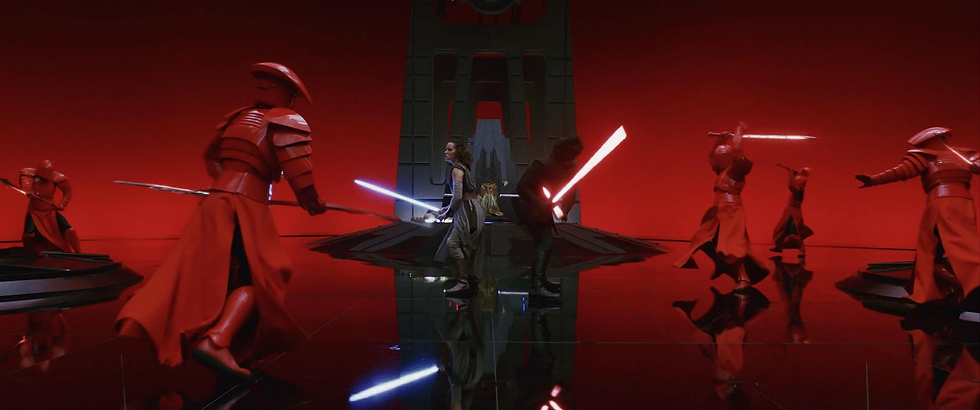
A similar issue plagued the Star Wars: The Rise of Skywalker era of Star Wars, where a lack of a unified plan meant characters moved forward, backward, and sideways depending on which director happened to be steering that particular instalment.
The pattern appears elsewhere:
Jurassic Park evolved into Jurassic World, where dinosaurs gradually stopped inspiring awe and started behaving like malfunctioning theme-park attractions.
Indiana Jones and the Dial of Destiny reminded us that even the greatest adventurers eventually run out of places to go.
The Terminator timeline now resembles the very time loop it once warned us about.
The problem isn’t that these films exist. It’s that they often chip away at what made the originals powerful in the first place.
Prequels: Explaining the Mystery Out of Existence
If sequels weaken endings, prequels have a habit of dismantling mystery.
The difficulty is structural. We already know where the story ends. The tension disappears. Instead of wondering what will happen, we’re left watching the mechanics of how they got there.
Too often, that means explaining things that were far more compelling when left unexplained.
Prometheus attempted to answer questions that Alien wisely left hanging in the dark. Hannibal Rising tried to humanise a villain who was terrifying precisely because he wasn’t humanised. And the Fantastic Beasts and Where to Find Them series demonstrated, in slow motion, how quickly a beloved world can lose its charm when stretched beyond its narrative limits.
There’s also a modern trend toward rebranding villains as misunderstood anti-heroes.
Cruella reframes a gleefully wicked character as something closer to a rebellious fashion icon. The edges are softened. The menace diluted.
At some point the character stops being expanded and simply becomes repackaged.
World-Building Isn’t the Same as Storytelling
Modern franchises love their lore. Timelines, canon charts, Easter eggs, multiverses — entire ecosystems of narrative scaffolding.
The problem is that lore isn’t the same thing as story.
We now have films that exist primarily to set up other films. Stakes are postponed. Conclusions delayed. Everything is part one of something else.
The Lord of the Rings: The Rings of Power illustrates this perfectly. Lavish production, immense scope, and an encyclopaedic knowledge of its world — yet often strangely hollow. It understands Tolkien’s mythology but rarely captures why it mattered emotionally.
The same thing happened to The Avengers era storytelling. For a while the connective universe felt impressive. Eventually the connective tissue became the point. Characters stopped having arcs and started having availability schedules.
When every instalment is important, none of them feel essential.

The Economics of Playing It Safe
Of course, none of this is accidental.
Franchises are predictable. Built-in audiences. Market recognition. Lower financial risk. Original stories, by contrast, require faith.
So studios lean on what works. Then lean a little harder. Then keep leaning until audiences start to quietly drift away.
Not with outrage. Just with indifference.
That’s how we end up with films like The Matrix Resurrections, which seems almost self-aware about its own unnecessary existence. Or endless reinterpretations of the Predator and Alien universes — some inspired, many interchangeable.
And looming remakes like The Running Man, patiently waiting to prove that Hollywood’s relationship with the past remains… persistent.

When It Actually Works
Occasionally, though, a sequel earns its place.
Mad Max: Fury Road didn’t simply revisit its predecessor — it reinvented the world around it.Blade Runner 2049 understood that restraint, atmosphere, and patience were the original’s strengths.
These films succeed because they justify their existence creatively, not just commercially.
Which is why they stand out.

The Quiet Cost of Franchise Fatigue
Franchises rarely collapse dramatically. They don’t explode. They thin out.
A little less wonder each time. A little less urgency. The spectacle becomes routine. The shock becomes scheduled.
Eventually audiences stop complaining and simply disengage.
And that’s when the realisation creeps in: the most powerful thing about many of those original films wasn’t the universe they created.
It was the fact that they ended.
Perhaps the boldest creative decision Hollywood could make right now isn’t launching the next franchise.
It’s recognising when a story has already said everything it needed to say.
Final Cut: When the Credits Should Roll
Franchises aren’t the enemy. Cinema has always revisited good ideas. The problem is when revisiting quietly becomes repeating, and repeating eventually becomes diluting.
When everything gets a sequel, a prequel, a reboot, and a streaming spin-off, the original magic starts to feel less like lightning in a bottle and more like a marketing strategy. The spectacle gets bigger, the universes get wider, and yet the stories somehow feel… smaller.
At some point audiences stop asking “what happens next?” and start asking “why is this still happening?”
And perhaps the lesson cinema keeps relearning is a very simple one:
sometimes the bravest thing a story can do is end.
Because as the movies themselves have been telling us for years:
“All those moments will be lost in time… like tears in rain.” — Blade Runner
“You either die a hero, or you live long enough to see yourself become the villain.” — The Dark Knight
“Just when I thought I was out… they pull me back in!” — The Godfather Part III
“The circle is now complete.” — Star Wars: Episode IV – A New Hope
Hollywood, of course, has a slightly different philosophy:
“We’ll be back.” — The Terminator


Comments